
Richard Tyler
Therapy
richard@thewillowtreefoundation.com
Wilstshire, England
Grief and Loss, Life Transitions, Chronic Illness, Spiritual Emergence, Midlife, Endings and Beginnings
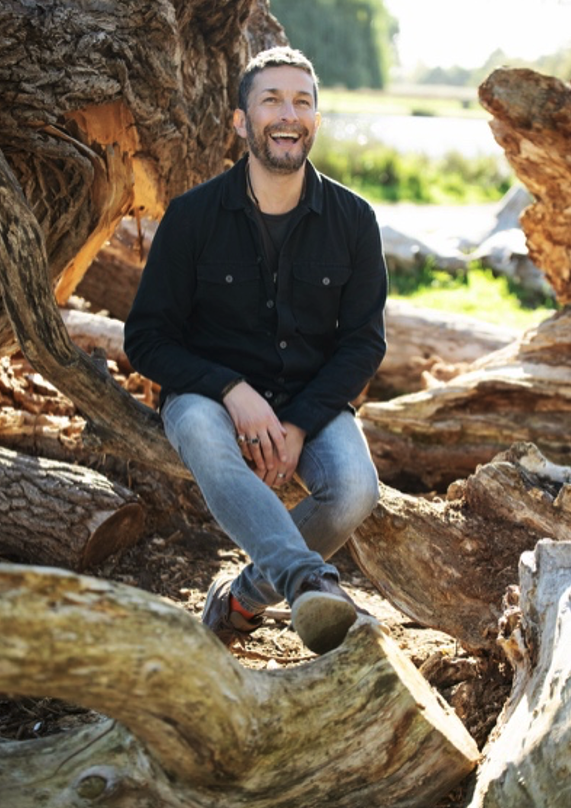
I offer a variety of ways to explore both your internal world and how it meets your external world. This will allow you to develop understanding about who you are now, how you have been shaped this way and who you are becoming.
I am a psychotherapist with a love of nature, living on a smallholding just north of Bath in Wiltshire, and I offer a diverse range of working to suit your needs. Indoors, outdoors, online or a mixture. I work creatively and in an embodied way, exploring through poetry, creativity and voice. I love to work with the wisdom of our more than human kin, to listen to the land and work with imagination.
Services Offerred

Personal Therapy
Wild Therapy

Constellation Mapping
‘Therapy is alchemy: turning the lead of suffering into the gold of wisdom’ – Jung
My Training
Constellations Coach; Coaching Constellations and Stephan Hausner
Leadership and Executive Coaching; ANLP and Professional Guild Trainer
Psychosynthesis Counsellor; The Psychosynthesis Trust
Cognitive Hypnotherapy; Anglo European College of Therapeutic Hypnosis
Acceptance and Commitment Therapy; Mindfulness Training Ltd
Apprenticeship for Grief Training; Francis Weller
How I Work
I offer therapy from a quiet and dedicated cottage in Wiltshire. For clients drawn to Wild Therapy, I also work in the tranquillity of local ancient woodlands, fields and at Westonbirt Arboretum, all offering opportunities to connect deeply with nature.
The First Step
Each journey begins with a conversation. I invite all prospective clients to an initial hour-long session where we can explore working together and to see if we’re the right fit.
An Adaptive Approach
You are unique and therefore it is important for me to draw upon my broad array of experiences and tools to make contact with you wherever you are in your story. My work is grounded in a compassionate and accepting relational approach, focusing on depth, tenderness and presence.
While our work often starts out with talking therapy, sessions will likely incorporate creative, imaginal, somatic and expressive methods. Together, we will discover the process that can most support you.
Ultimately, I believe deeply in the innate wisdom the body holds to heal and recover itself. My role is to walk alongside you, acting as your guide, following your twists, turns and inner knowing, trusting both the timing and direction. Beyond each tool, technique and training, this is about human connection. My commitment is to reach you, fully, exactly where you are.
“The part can never be well unless the whole is well” —Plato
Personal Therapy
My approach to weekly therapy is relational, attentive, and paced to meet you exactly where you find yourself. There is no expectation to arrive with clarity, coherence, or a defined agenda. In fact, the encouragement is to arrive as your find yourself, in whatever state of messiness and confusion that may be. We begin with what is present—spoken or unspoken—and allow the work to unfold from there. Some weeks the focus may be on untangling complex inner narratives; other times it may be about staying close to sensation, emotion, or the simple truth of being tired, lost, or unsure. Therapy becomes a steady place to land, where nothing needs to be fixed or performed, and where your experience is welcomed in all its unfinishedness. You are enough, just as you are.
Our sessions take place in our small cottage, nestled in the village of Nettleton, offering a consistent and contained space in which trust can deepen over time. Working together on a weekly basis allows patterns to be noticed gently, held with care, and explored in ways that feel both safe and alive. I draw on evidence-based psychotherapy alongside creative, embodied, and soul-attentive practices—often inviting metaphor, imagery, writing, or moments of stillness when words fall short. At its heart, this work is about relationship: learning to listen more closely to yourself, to honour what has been shaped by your past, and to support what is quietly asking to emerge now.
‘The purpose of psychotherapy is to set people free’ – Rollo May
Wild Therapy
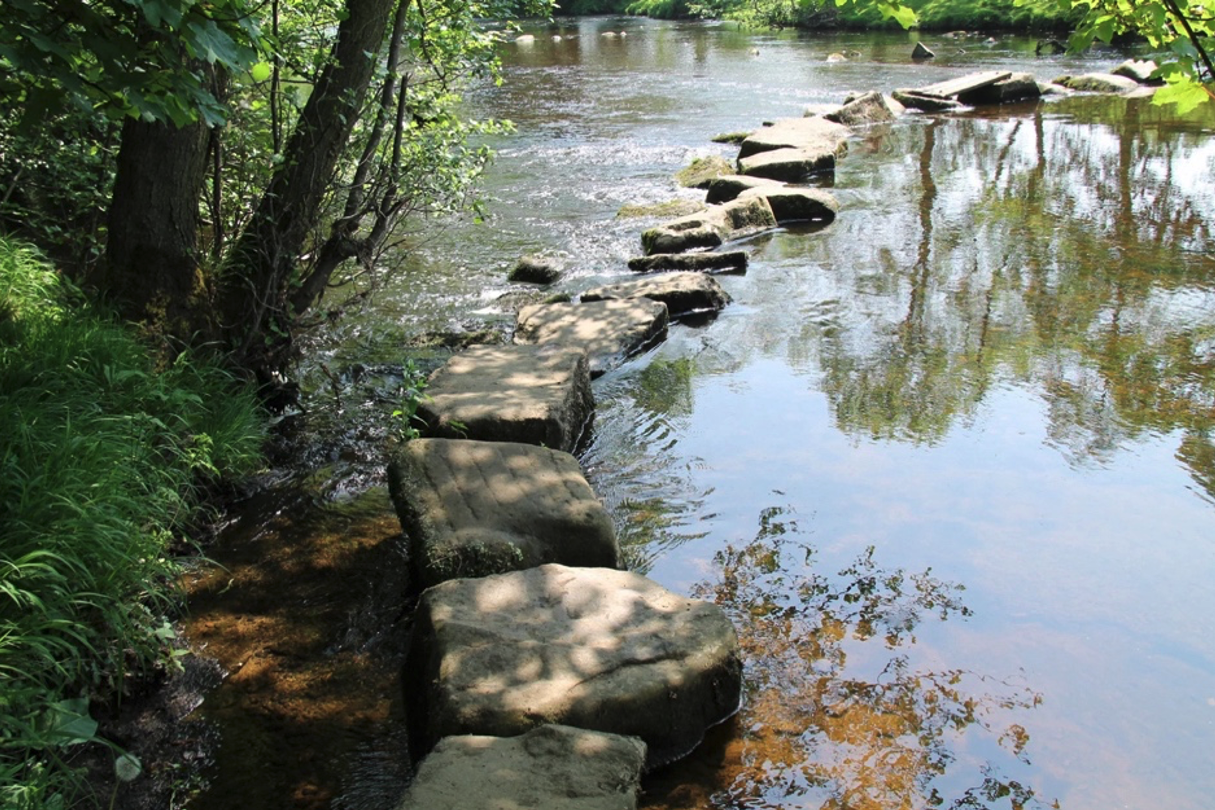
Wild Therapy is a way of remembering what the body already knows. We walk, pause, notice, and listen as the natural world becomes both setting and teacher. Movement loosens what is held; fresh air and changing terrain invite a different kind of presence than the therapy room alone can offer. As we engage with weather, seasons, trees, water, and land, something essential begins to soften and re-orient. Nature does not analyse or rush us—it reflects, responds, and patiently invites us back into right relationship with ourselves.
Working therapeutically outdoors supports a deeply embodied process. Conversation unfolds alongside walking; silence is welcomed; metaphor arises naturally from the land beneath our feet. The wider ecology often gives language to what has been hard to name—grief mirrored by falling leaves, resilience revealed in roots and stone, transition marked by the crossing of thresholds. In Wild Therapy, healing is not something done to you, but something that emerges through attention, movement, and relationship. Together, we allow the living world to guide us toward greater wholeness, authenticity, and belonging—one step at a time.
In practice, Wild Therapy sessions take place as gentle, mindful walks or periods of stillness in natural settings that support safety and privacy. We move at a pace guided by your needs, with space for conversation, reflection, creative exploration, or silence. Sessions are shaped collaboratively and may include walking side by side, sitting on the land, or working with seasonal and embodied themes. No particular level of fitness or outdoor experience is required—only a willingness to meet yourself in relationship with the living world. Sessions can also form part of a hybrid arrangement, combining outdoor, indoor and online work to support continuity and depth.
“A walk in nature walks the soul back home.” — Mary Davis
Constellation Mapping
Working one-to-one with systemic constellations offers a powerful way of seeing what is usually hidden from view. A constellation is a living map of the relational systems we belong to—family, ancestry, work, community—and the unseen loyalties, patterns, and entanglements that continue to shape our lives. In a session, elements of your system are represented in the room through objects, images, or embodied positioning, allowing the dynamics to be experienced rather than simply talked about. What emerges is often surprising in its clarity, revealing how love, trauma, exclusion, or unfinished stories may be moving through you across time and generations.
The benefit of this work lies in its ability to bypass the intellect and speak directly to the body and the soul. Once you have experienced it, you will understand the profound power that rests within this work. Constellations can gently loosen patterns that feel stuck or repetitive, offering new perspectives, movements, and possibilities for integration. Working in this way often brings a deep sense of recognition and relief—as if something long carried no longer needs to be held alone. My role is to hold a careful, attuned field in which these movements can unfold safely, at your pace. We work with what shows itself, trusting the innate intelligence of the system and your own capacity to meet it with presence, compassion, and care.
With this type of work, you may come to me because there feels to be a singular issue with which you are stuck and would like some resolution to. In most cases, we will set out to work together for just a few sessions. Working with constellations will often journey directly to the heart of your entanglements, thereby reducing the need for a commitment to long term therapy. That said, we can certainly discuss a longer relationship should you find yourself wanting deeper exploration.
“A living system is defined not by the individual parts, but by the relationships between them. The flow of energy. The flow of love.” – Bert Hellinger
Frequently Asked Questions
What is the difference between counselling and psychotherapy? Counselling often addresses specific, short-term issues, while psychotherapy typically focuses on deeper, long-standing, or more complex emotional or psychological patterns. I offer both short and long term therapy.
What happens in the first session? It is usually an assessment session where you discuss your reasons for seeking help, your history, and your goals for our work together.
How long does therapy take? There is no fixed time; it depends on the complexity of the issues, ranging from 6-10 sessions through to several years for deep-seated patterns.
Do I have to have weekly sessions? Yes, a weekly rhythm is an important aspect of our relationship as it helps create a safer and stronger container for our work. Occasionally, when I’ve worked with someone for a while, we might shift to a fortnightly rhythm if the client asks for that.
How long is each session? Sessions are 50 minutes in length.
Is therapy confidential? Absolutely. Everything discussed is confidential, but as a therapist, I am obligated to break confidentiality if there is clear evidence of severe risk to yourself or others.
Will I be judged? No. What I offer you is a safe and non-judgmental space to explore where you are stuck in life. I come to you as someone who will walk alongside, attentive and understanding to all that you bring.
Can I attend one session and decide? I believe that the largest element of this work is the sturdiness of the relationship that you and I create. Therefore, finding the right therapist for you, is essential. I don’t for one moment believe I will be everyone’s cup of tea. So yes, you can test the waters to see if I’m the right fit, although one session is rarely enough to address complex issues. I do charge for this first full 50 minute session.
Are you qualified? Yes, I am registered and accredited through BACP. During the last 25 years, I have studied psychology, behaviour, group dynamics and trained as a coach, cognitive hypnotherapist and therapist. I believe that my diverse skillset and repertoire of psychological modalities, enables me to be the best support to you, I possibly can.
What happens if I cannot make a session? This happens every now and then. Providing you give me at least 24hrs notice, there will be no charge. Less than 24hrs will incur a full session fee. I have limited availability in the week but I will always do my best to rearrange sessions where possible.
Do you, as my therapist, work on yourself? Oh yes. Along with my monthly supervision where I am supported with my client work, I continue to attend specialist workshops and trainings to develop and hone my practice.
What should I do if I am in crisis? If you are in crisis, you should call 999, go to A&E, or contact your local mental health crisis team. Here are some other contacts you might find supportive:
Mind: www.mind.org.uk
Papyrus (for young people): www.papyrus-uk.org
CALM: www.thecalmzone.net
Samaritans: www.samaritans.org.uk
‘Just like trees, we only grow where we are most vulnerable. Meeting ourselves and other at the edge of comfort, befriending our cracks we allow the emergence of the new’
– Bayo Akomolafe
Contact Richard
My work takes place either in our cottage in Nettleton or in outdoor spaces nearby.
Please make initial contact by using either email or the Contact form. I aim to reply to you within 24hrs on weekdays.
“When the inner and the outer are wedded, revelation occurs” — Hildegard von Bingen